
Tips For Investing in Commercial Real Estate in Ghana
Investing in Commercial Real Estate in Ghana is projected to reach a value of US$73.14 billion in 2024, showing a promising future for the industry in Ghana. The market is expected to grow at a consistent annual rate (CAGR 2024-2029) of 5.32%, leading to a substantial market volume of US$94.80 billion by 2029.
This growth trajectory indicates significant expansion and investment opportunities within Ghana’s commercial real estate sector. Globally, the United States is expected to maintain its dominance in the real estate market, with a projected value of US$25,280.0 billion in 2024. However, Ghana’s commercial real estate market is poised for substantial growth, solidifying its position in the international real estate landscape. The market’s growth is further supported by an increase in foreign investment, driven by Ghana’s stable political environment and growing economy.
The commercial Real Estate market in Ghana is experiencing big growth and development because of changing customer preferences, increasing foreign investments, local special circumstances, and underlying macroeconomic factors. Hence, investing in commercial real estate in Ghana is an ongoing trend among universal investors.
This blog aims to provide the essential tips you need to follow if you are thinking of investing in commercial real estate in Ghana.
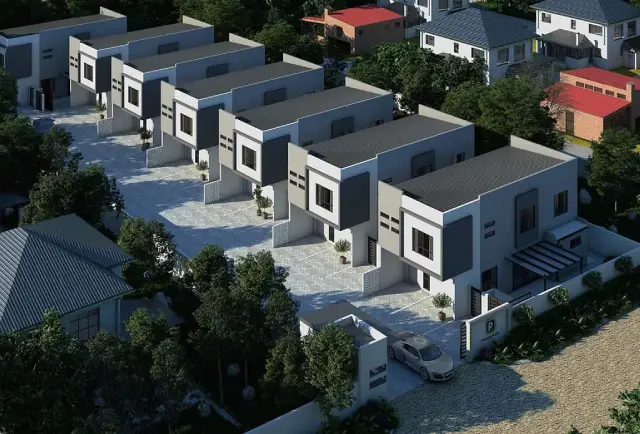
Understand the market Commercial Real Estate in Ghana
The Commercial Real Estate sector in Ghana is witnessing notable expansion and progress. Consumer inclinations, market trends, local unique conditions, and fundamental macroeconomic elements are all driving this favorable movement. Consumer inclinations in Ghana’s Commercial Real Estate sector are shifting towards contemporary and well-equipped office environments.
Enterprises are progressively seeking commercial properties that provide amenities such as high-speed internet, security systems, and abundant parking facilities. Moreover, there is an increasing demand for adaptable office spaces that can meet the evolving requirements of businesses. Market trends suggest a surge in foreign investments within Ghana’s Commercial Real Estate industry.
In major cities like Accra, Kumasi, Tema, and Takoradi, the commercial real estate market has seen a surge in development projects, ranging from office buildings to self-storage facilities.
The nation has undergone steady economic expansion in recent years, leading to heightened business activities and a rising need for commercial properties. Moreover, the growing middle class and urban development have fostered an expanding consumer market, driving a higher demand for retail and commercial spaces.
Urbanization and mixed-use developments, flexible workspaces, technology integration and smart buildings, and e-commerce and logistics are commercial real estate trends that have been emerging in Ghana.
Read about: Prime Investment: Properties for Sale in Ghana
What are the key locations for research for Commercial Real Estate in Ghana?
- Accra
Accra has been a prime location for investors who are thinking of investing in commercial real estate in Ghana. The demand for office space in Accra has increased in recent years, particularly in the central business district (CBD) of Accra, the capital city, driven by the country’s overall economic growth and increasing foreign investment.
The CBD is the primary location for high-end office buildings, with rental rates ranging from $20 to $40 per square meter per month. Some of the notable office buildings in Accra include The Atlantic Towers, The Octagon, The Grand Oyeeman, Advantage Place and One Airport Square.
The construction of new office buildings in the city is ongoing, as developers seek to meet the growing demand for office space. While the COVID-19 pandemic has led to a shift towards remote work, the demand for office space is expected to remain strong in the long term, as businesses seek to establish a physical presence in the country.

- Kumasi
Kumasi is renowned as a prime destination for investors seeking to invest in the commercial real estate market in Ghana. The city’s economic expansion has sparked a demand for commercial properties, with businesses eager to establish or grow their presence in the area.
Situated in a central transportation and trade hub, Kumasi’s strategic location makes it easily accessible for businesses looking to connect with other parts of Ghana and neighboring countries. It is also known for its growing population and urbanizing which contributes to the demand for investing in commercial real estate in Ghana.
- Takoradi
Takoradi primarily offers investment opportunities in commercial real estate. The city’s strategic location makes it a hotspot for businesses, and investors can explore warehouses and office spaces.
Learn about: Your Guide for properties for sale in Accra
The legal framework for Commercial Real Estate in Ghana
Before starting to invest in commercial real estate in Ghana, you need to fully understand Ghana’s property laws, including land ownership, lease agreements, and zoning regulations.
Speaking of land ownership, according to customary law, the chief is the custodian of the land and is responsible for allocating land to members of the community for use.
The legal basis for stool land ownership is governed by customary law, which is recognized by the Constitution of Ghana.
Article 11(1) of the Constitution states that
- “customary law is part of the law of Ghana”.
In addition, the Land Act, 2020 (Act 1036) recognizes the ownership of stool land by traditional authorities.The process of acquiring stool land usually involves negotiating with the traditional authorities or chiefs. The traditional authorities may impose conditions on the use of the land, such as requiring that it be used for a specific purpose or that it cannot be sold or transferred without their consent. These conditions must be adhered to by the purchaser of the land.
Secondly, lease agreements in Ghana includes party identification, which means Every lease agreement needs to make it clear who’s involved, description of the rental property, which includes identifying the exact location of the rental property, including the full address, to avoid any confusion.
- tenancy period
meaning to define the duration of the lease, including the start and end dates of the rental agreement, rental price and requirements which means specifying the monthly rent, total rent for the lease term, due dates, late payment consequences, payment methods, and responsibility for utilities, deposit amount and terms, which is outlining the security deposit amount, payment timing, conditions for deductions, and the timeline for returning the deposit after the lease ends, tenant/landlord responsibilities which includes detailing the maintenance and safety responsibilities of both the tenant and landlord, including any specific rules or obligations, and finally party signatures, which is ensuring both the tenant and landlord sign the lease to make the agreement legally binding.
- zoning regulations.
In Ghana, zoning regulations play a crucial role in commercial real estate investment. Different zones are designated for specific uses. Residential zones permit dwellings along with compatible facilities such as parks, schools, and places of worship, with varying density levels.
Commercial zones are reserved for retail stores, offices, hotels, entertainment, and other service-oriented businesses. Industrial zones are designated for manufacturing, processing plants, factories, warehouses, and storage yards. Special purpose zones are set aside for infrastructure, utilities, transportation, and institutional uses.
Recreational zones include parks, sports fields, golf courses, and conservation areas, while agricultural zones focus on farming, horticulture, agro-processing, forestry, and animal husbandry. Additionally, mixed-use zones allow for a harmonious blend of residential, commercial, and institutional activities, offering diverse investment opportunities.
Explore: Your Guide for Living in Ghana
What are the possible risks of investing in commercial real estate in Ghana?
When investing in commercial real estate in Ghana, you may face market risks, which include economic instability, currency fluctuations, and changes in government policies, or property-specific risks like the location, condition of the property, and tenant reliability.
Therefore, conducting thorough due diligence, securing insurance, and diversifying investments are the best ways to decrease the risk possibility when investing in commercial real estate in Ghana.
Conclusion
In summary, investing in commercial real estate in Ghana offers significant opportunities for growth, driven by the country’s expanding economy, increasing urbanization, and favorable market conditions.
However, potential investors must approach this market with a clear understanding of the local landscape, including legal frameworks, key locations, and emerging trends. By carefully researching and navigating the unique challenges, such as market volatility and regulatory complexities, investors can mitigate risks and capitalize on the promising prospects within Ghana’s commercial real estate sector. With the right strategies and insights, investing in commercial real estate in Ghana can be a lucrative venture that aligns with the nation’s ongoing development.
