
The Impact of Road Infrastructure on Property Prices in Accra
road infrastructure and property prices in Accra plays a vital role in economic development, significantly influencing property values, especially in urban settings like Accra. Road networks, bridges, and transportation hubs are critical to how a city’s real estate market evolves. In this blog, we will explore how infrastructure development, particularly road infrastructure and property prices in Accra, impacts property prices in Accra.
We will analyze the role of recent investments in road infrastructure and property prices in Accra and their effects on local real estate, touching on aspects such as accessibility, economic activity, and urban expansion.
How road infrastructure and property prices in Accra?
Infrastructure, particularly transportation networks, is a significant factor in determining property values. Roads, bridges, tunnels, and public transportation improvements make specific locations more attractive for investment and living. In cities like Accra, where rapid urbanization is occurring, improvements in road infrastructure and property prices in Accra can lead to a substantial increase in property prices. Accessibility and connectivity drive the demand for both residential and commercial properties.
For instance, the construction of a new road or the expansion of an existing highway can unlock areas previously considered too remote or underdeveloped. Such developments often lead to a surge in property prices, as these areas become more accessible for businesses and residents alike. In contrast, areas that remain disconnected from critical road networks may struggle to see property value appreciation. This makes infrastructure investments a pivotal factor in urban planning and real estate development.
Transport Infrastructure and Its Direct Impact
Among the various types of infrastructure, transport infrastructure has the most direct and immediate impact on real estate. Efficient road networks allow for faster and more convenient travel, thus enhancing the value of properties located nearby. Improved road access enables quicker commuting, opening up once distant or rural areas for residential development. The expansion of road networks in Accra has already shown signs of increasing the demand for properties in areas such as the outskirts of the city.
A great example of this is the ongoing Tema Motorway expansion project. The motorway is one of the primary roads connecting Accra with other parts of the country. As this expansion improves traffic flow and reduces congestion, nearby properties, including residential and commercial real estate, are likely to appreciate due to the enhanced accessibility.
Economic Activity and Infrastructure
Investment in road infrastructure and property prices in Accra does more than just improve connectivity; it also boosts economic activity, which indirectly affects property prices. New roads and highways encourage the establishment of commercial centers, business hubs, and residential developments. The increased economic activity creates jobs, attracting a workforce and businesses to the area. As a result, there is a rise in demand for residential and commercial properties.
Accessibility and Urban Expansion
Accessibility is one of the most important drivers of real estate development. Improved roads connect previously isolated areas with city centers and commercial hubs, leading to urban expansion. In Accra, where the city’s boundaries are constantly expanding, road infrastructure and property prices in Accra plays a pivotal role in how and where development occurs.
Areas like East Legon, once considered relatively remote, have seen property prices skyrocket over the years, largely due to road improvements and better access to central business districts. As these road networks are extended or improved, property values in the surrounding areas are likely to follow an upward trend.

Accra’s road development is also opening new opportunities for urban expansion into suburban and even rural areas. The development of roads leading to towns on the outskirts of Accra, like Kasoa and Amasaman, has transformed them into highly desirable locations for both residential and commercial real estate. Improved road infrastructure and property prices in Accra not only opens up new areas but also spreads economic growth across a broader geographic area, making Accra’s expansion sustainable and beneficial for property investors.
Environmental Infrastructure and Property Values
While roads and transport networks play a significant role in property pricing, other types of infrastructure also impact the market. For instance, energy and environmental infrastructure, particularly renewable energy initiatives, are increasingly influencing property values. Developments such as solar farms or wind turbines that promote sustainable energy often attract eco-conscious buyers, who may be willing to pay a premium for properties that are energy-efficient or located near such projects.
In Accra, this trend is still emerging, but as global awareness of environmental sustainability grows, such factors may soon become more relevant to the city’s real estate market. This also means that future investments in both road and environmental infrastructure will likely drive property values higher.
Read about: The Future of Real Estate in Accra: What to Expect in the Next 5 Years
Return on Investment from Infrastructure Projects
Investing in areas with upcoming infrastructure developments can yield high returns for property owners and investors. Well-planned and well-executed road projects tend to increase the value of nearby properties, offering both immediate and long-term gains.
For investors, understanding the timeline of infrastructure projects is critical. Those who purchase properties in Accra before a significant road project begins will likely see the highest return on investment once the infrastructure is complete. As urbanization and development plans for Accra continue, smart investors will track infrastructure developments closely to make well-timed property purchases.
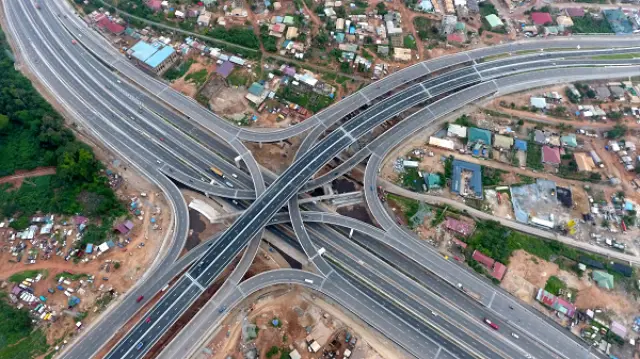
For example, the expansion of the Tema Motorway and the Pokuase Interchange has already shown a notable increase in property prices in those regions. Property owners and investors who anticipated these changes have benefited from considerable value appreciation.
Urbanization and Gentrification
Infrastructure investments often lead to urban renewal and gentrification, particularly in older or underdeveloped parts of cities. When road infrastructure and property prices in Accra improves in these areas, property prices can increase rapidly, sometimes pricing out existing residents. While gentrification is a controversial subject, it is undeniable that such infrastructure projects can dramatically change the local real estate landscape.
In Accra, areas undergoing urban renewal due to road infrastructure and property prices in Accra projects have seen rising property prices. As urban expansion pushes into older neighborhoods, improved roads and better access to city centers make these areas attractive to both businesses and new residents.
Conclusion
Infrastructure development, especially in road networks, has a profound of Road Infrastructure and Property Prices in Accra. Improved connectivity, accessibility, and economic activity drive up property prices, making infrastructure projects a critical factor for both real estate investors and city planners to consider. As Accra continues to grow, infrastructure investments will shape the future of its real estate market, offering opportunities for those who understand the dynamics between infrastructure and property values.
With projects like the Tema Motorway expansion, Pokuase Interchange, and the Ghana Trade Fair Redevelopment, Accra is poised for significant growth. These developments highlight the importance of infrastructure in determining real estate prices, and as the city continues to expand, more areas will benefit from increased property values due to road infrastructure and property prices in Accra investments. Understanding these trends will help investors, homeowners, and policymakers make informed decisions in the years to come.
