
How is the Ghana economy and real estate market?
Ghana has a large economic base due to its diverse and varied resources, from manufacturing and exporting digital technology to manufacturing and exporting cars and ships, and exporting hydrocarbons and industrial minerals, which made Ghana one of the highest GDP per capita in West Africa. Due to the repatriation of GDP, Ghana became the fastest growing economy in the world in 2011. Let’s talk about Ghana economy and real estate market with Enmaa.
Ghana is also the second largest producer of gold in Africa (after South Africa) and the second largest producer of cocoa (after Côte d’Ivoire). It is also a country rich in diamonds, manganese ore, bauxite and oil.
Despite the great economic progress, there are still obstacles. Certain institutions need to be reformed, property rights need to be improved, and the public investment system in Ghana lacks market transparency.
Ghana economy and real estate market
Ghana economy and real estate market is expected to witness significant growth in the coming years.
Among the various market segments in Ghana, residential real estate is expected to dominate the market with a projected market size of US$440.10 billion in 2020.
Ghana economy and real estate market is expected to maintain a steady growth rate in the coming years, with an annual growth rate (CAGR 2024-2029) of 3.53%. This growth trajectory is expected to take the market size to US$610.60 billion by 2029.
The real estate market economy in Ghana is witnessing a rise in demand for affordable housing due to population growth and urbanization. Therefore, the real estate market economy in Ghana has witnessed significant growth and development in recent years.
You can also read: Prime Investment: Properties for Sale in Ghana
What are the reasons for the booming Ghana economy and real estate market?
Ghanaians are increasingly looking to invest their money in the real estate market economy as a sure way to secure their financial future. This is due to the desire for long-term capital appreciation and rental income. In addition, there is a growing demand for affordable housing, especially among the middle-income population. Ghanaians also prefer gated communities and modern amenities such as swimming pools, gyms and playgrounds.
One of the major trends in Ghana economy and real estate market is the increasing number of real estate development projects, especially in major cities such as Accra and Kumasi. These projects range from residential buildings to commercial properties and mixed-use projects. The main reasons for this trend are population growth and urbanization, as well as the government’s efforts to attract foreign direct investment.
Another trend in the market is the rise of Real Estate Investment Trusts (REITs) in Ghana. REITs allow individuals to invest in real estate without having to directly own and manage the property.
This has made real estate investment more accessible to a wider range of investors and has contributed to the growth of the real estate investment market in Ghana.
One of the main reasons for the boom in the real estate investment market in Ghana is the diaspora influence. Many Ghanaians living abroad invest in the real estate market in their home country as a way to connect with their homeland, and potentially retire there in the future. This has led to an increase in demand for luxury properties and a boom in Ghana economy and real estate market.
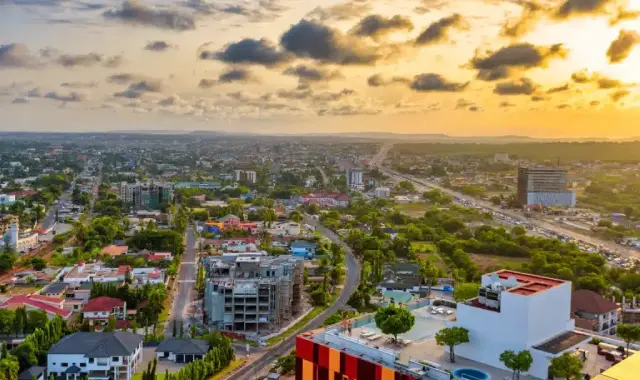
What are the factors that have led to the development and prosperity of the real estate market economy in Ghana?
The growth and development of the economy and real estate market in Ghana are due to several key economic factors, namely:
- The Ghana economy and real estate market has recently witnessed stable growth in recent years, resulting in increased disposable income and consumer confidence. This has increased the willingness of investors to invest in real estate.
- The policies and initiatives implemented by the government to boost the real estate market economy in Ghana, such as the establishment of the Ghana Real Estate Developers Association and the introduction of tax incentives for real estate developers. These measures have attracted local and foreign investors to the market.
- The government has significantly developed Ghana’s infrastructure in recent years, with the construction of new roads, bridges and other transportation networks. This has made previously inaccessible areas more attractive for real estate development and contributed to the growth of the real estate market economy in Ghana.
What are the factors that affect real estate prices?
Real estate prices are a major factor influencing the economy and society, as they affect the purchasing power of individuals and constitute an important source of wealth and investment.
With the rise in real estate prices in many real estate markets around the world, this trend raises interest and concern among investors and dealers in this vital sector, and there are several social and economic factors that affect real estate prices.
Know about: How much do i need to invest in real estate in Ghana?
Social factors affecting the rise in real estate prices
Social factors are among the most important factors affecting the rise in real estate prices, such as:
- Increase in population and demand for housing
The increase in population and demand for housing is one of the social factors affecting the rise in real estate prices. As the population increases, the demand for real estate increases, which leads to an increase in prices.
- Demographic change and its impact on prices
As the demographic structure changes, the demand for real estate and its value changes. For example, when the number of young people in the population increases, the demand for small apartments suitable for them may increase, leading to an increase in the prices of these properties. Conversely, when the number of elderly people increases, there may be less demand for large properties and commercial libraries, which may lead to a decrease in their prices. Therefore, understanding demographic changes can help predict real estate market trends and understand their impact on prices.
- Geographical distribution of real estate and its impact on prices
In areas with high demand for housing and limited resources, properties will be more expensive. Conversely, in areas with a surplus of real estate and supply exceeding demand, prices are often low.
The services and facilities available in the area also play a major role in determining real estate prices, as areas with developed infrastructure and available public services may be more valuable and have higher prices. Therefore, the geographical distribution of properties must be taken into account when analyzing their prices and directing real estate investments.
- Changes in lifestyles and housing needs
As the needs of the population change, the demand for certain types of properties changes and thus their prices change. For example, if the demand for small apartments with modern finishes and modern facilities increases, the price of this type of property can increase. Changes in lifestyles, such as increased demand for properties with private gardens or outdoor spaces, can also lead to higher prices for these properties.

Economic factors affecting the rise in real estate prices
Economic factors are one of the factors that greatly affect the rise in real estate prices. Among these factors comes:
1. Supply and demand
This is one of the main factors affecting the rise in real estate prices. When demand for real estate is higher than supply, there is a shortage of available properties and hence the price of real estate increases. Supply and demand are influenced by multiple factors such as demographic changes, economic changes, and cultural trends.
2. Inflation
This is one of the most important factors that lead to rising real estate prices. When there is economic inflation, the general price of goods and services, including real estate, increases. Inflation is associated with an increase in the amount of money circulating in the economy, which causes money to lose its purchasing power, prompting people to look for a safe investment for their money. Real estate is usually considered a safe investment and can significantly boost demand for it in times of inflation, which in turn leads to higher prices.
3. Bank Interest
Bank interest plays a role in rising real estate prices. When interest rates are low, borrowing becomes cheaper and more attractive. It is common for investors to borrow to buy properties and later rent or sell them at a high profit. This easy lending reduces the overall cost to the buyer and increases the demand for real estate.
The Ghana economy and real estate market is experiencing significant growth and development due to customers’ preferences for long-term investment and affordable housing, the trend of increasing real estate development projects and the emergence of real estate investment trusts. Local conditions, diaspora influence, underlying macroeconomic factors of stable economic growth, government policies and infrastructure development also contribute to the market growth.
Finally, an analysis of the economic and social factors that influence the rise in property prices in Ghana demonstrates the importance of understanding the real estate market in a comprehensive manner. Understanding these factors and their impact on the real estate market helps investors and stakeholders in the sector make informed decisions and identify promising investment opportunities.
