
Affordable housing in Ghana
Just like in many developing countries, Ghana struggles and suffixes in providing affordable housing in ghana to its quickly growing population. It is envisioned that quick urbanization when tied to increasing house prices, will create a housing crisis that is most dramatically felt by low-income earning families.
This article, therefore, unwraps the entanglements of affordable housing in Ghana, looks into the current predicaments, and brings forth the likely solution to the emerging problem.
Affordable Housing Challenge in Ghana
The demands for affordable housing in Ghana far outstrip the supply. There are so many things which contributed to this crisis:
- Rapid Urbanization: This has led to a housing shortage because there has been a great migration of people into urban centers from rural areas.
- Increased Cost of Housing: The land has become very expensive, building materials are pricey, and the cost of labor is high, making it hard to buy a home.
- Informal Settlements: The dearth of low-cost housing availability has fostered the development of informal settlements characterized by deplorable living conditions and a lack of basic facilities.
- Limited Access to Finance: Formal mortgage financing remains largely inaccessible to low-income households, thereby defeating the very purpose of homeownership aspirations of large sections.
Read more: How much do i need to invest in real estate in Ghana?
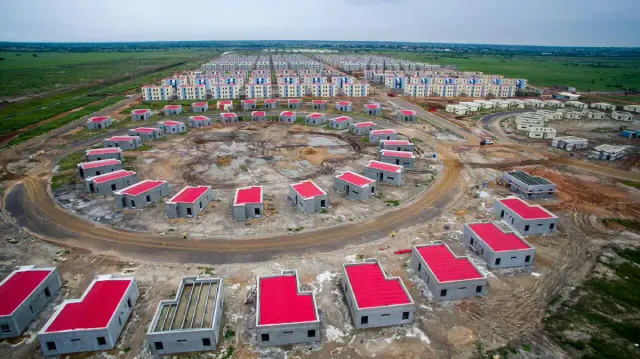
Government Initiatives on affordable housing in Ghana
Knowing full well the severity of the situation, the government of Ghana has, over the years, come up with several initiatives to try to grapple with the affordable housing challenge:
- Public-Private Partnerships: Collaboration with private developers in the construction of low-cost housing projects.
- Subsidized Housing: Monetary aid provided to low-income families to purchase or lease a house.
- Land Allocation: Identification and allocation of land for the development of affordable housing.
- Revision in Mortgage Financing: Introduce policies that will make mortgage financing accessible to low-income earners.
Know about: Find Your Ideal Apartment for sale in Ghana
Private-sector involvement in affordable housing in Ghana
It’s evident that the private sector plays an important part in solving the affordable housing crisis. Real estate developers, financial institutions, and social enterprises have been increasingly involved in developing new and unique houses.
- Affordable housing developments: Private developers are involved in the construction of affordable housing units to meet the increasing demand.
- Rental housing: Provides affordable rental options for people with low incomes. Mortgage financing: Financial institutions are giving loans to low-income earners.
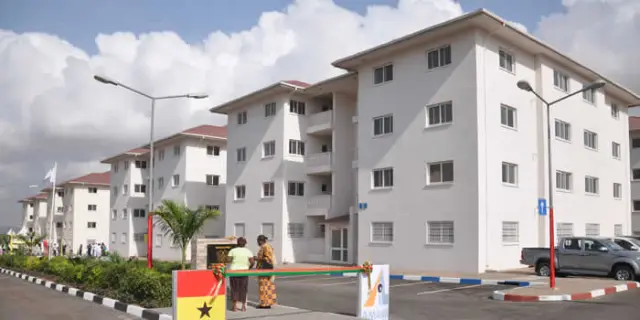
Financing Alternatives for affordable housing in ghana
Access to affordable housing is often constrained by lack of financing. However, new financing opportunities now exist:
- Mortgage Financing: Government-backed schemes for mortgages widen the possibility of owning a home.
- Savings and Credit Cooperatives: These are organizations in which people who are relatively poor secure alternative sources of finance.
- Housing Grants and Subsidies: It can be possible through government subsidies to lessen the very high upfront costs of housing.
- Rent-to-Own Programs: Tenants are allowed gradual equity for purposes of building up towards homeownership.
Read about: The Future of Real Estate in Accra: What to Expect in the Next 5 Years
Challenges and Opportunities in affordable housing in ghana
While strides have been taken to work on this, an enormous amount of work remains for the affordable housing sector. Many of these challenges can only be met by an interagency approach involving the government, private industry, and community stakeholders.
- Land Acquisition: The challenge is in securing affordable land for housing development.
- Infrastructure: sustainable communities require infrastructures for potable water, sanitation, and transportation.
- Regulatory Framework: The streamlining of regulations and reduction of bureaucratic aversions can expedite affordable housing development.
- Partnership Building: Collaboration among the Government, private sector, and communities is very important for effective implementation of affordable housing projects.
The affordable housing challenges in Ghana are so huge that it requires relentless efforts to be surmounted. This can be done by sustained government commitment, private sector investment, and new mechanisms of innovative financing leading toward the creation of more sustainable and all-inclusive housing solutions for each Ghanaian.
